Community Spotlight: How a Temecula Fitness Studio Got Its Coaches CPR & AED-Ready Before the Fall Rush
· 8 min read · David Onori
As fall approaches, fitness studios across Temecula prepare for a familiar seasonal shift: fuller class schedules, new memberships, youth programs, and more people returning to regular exercise.
For one boutique strength-and-conditioning studio in Temecula, the fall preparation checklist included more than ordering supplies and updating the class calendar. The owner also scheduled mobile CPR and first aid training for the studio's coaches and front-desk staff before the busy season began.
The goal was practical: help the team recognize a life-threatening emergency, respond with confidence, and know how to use the equipment already available at the facility.
Rather than sending employees to separate public classes, the studio arranged for training to take place at its own location. The team completed online learning modules on their own schedules, then finished the hands-on skills session together at the gym.
That approach gave the staff an opportunity to practice emergency response in the same environment where they work every day.
Why Fitness Studios Need a Clear Emergency Response Plan
Fitness facilities are active environments by design. Members may be lifting weights, participating in high-intensity intervals, running on treadmills, or completing group classes in warm, crowded spaces.
That activity creates several situations in which staff may need to respond quickly:
- Sudden cardiac arrest during or after strenuous exercise
- Heat-related illness or dehydration
- Falls, sprains, fractures, and other injuries
- Choking in a lobby, break area, or family program
- Severe bleeding caused by equipment, a fall, or another accident
- Medical emergencies involving children or teenagers
- An unconscious or unresponsive member who needs immediate assessment
A person experiencing cardiac arrest may not show obvious warning signs. Recognizing cardiac arrest means noticing when someone is unresponsive and not breathing normally, activating emergency services, beginning CPR, and using an AED as soon as it is available.
For a studio team, knowing where the AED is located is only one part of being ready. Staff should also understand who calls 911, who retrieves the AED, who meets arriving responders, and how other members are moved safely away from the emergency.
The California Health Club AED Requirement Guidelines describe training, AED maintenance, emergency response planning, and staff availability requirements for covered health clubs and health studios. Facility owners should review current requirements with qualified legal, medical, or local EMS resources.
A Training Plan Built Around the Studio's Real Needs
The Temecula studio wanted its preparation to go beyond a basic certification appointment. Coaches needed skills relevant to the exercise floor, while front-desk staff needed to feel comfortable activating the emergency response plan and guiding help to the right location.
The on-site training covered:
Adult and Pediatric CPR
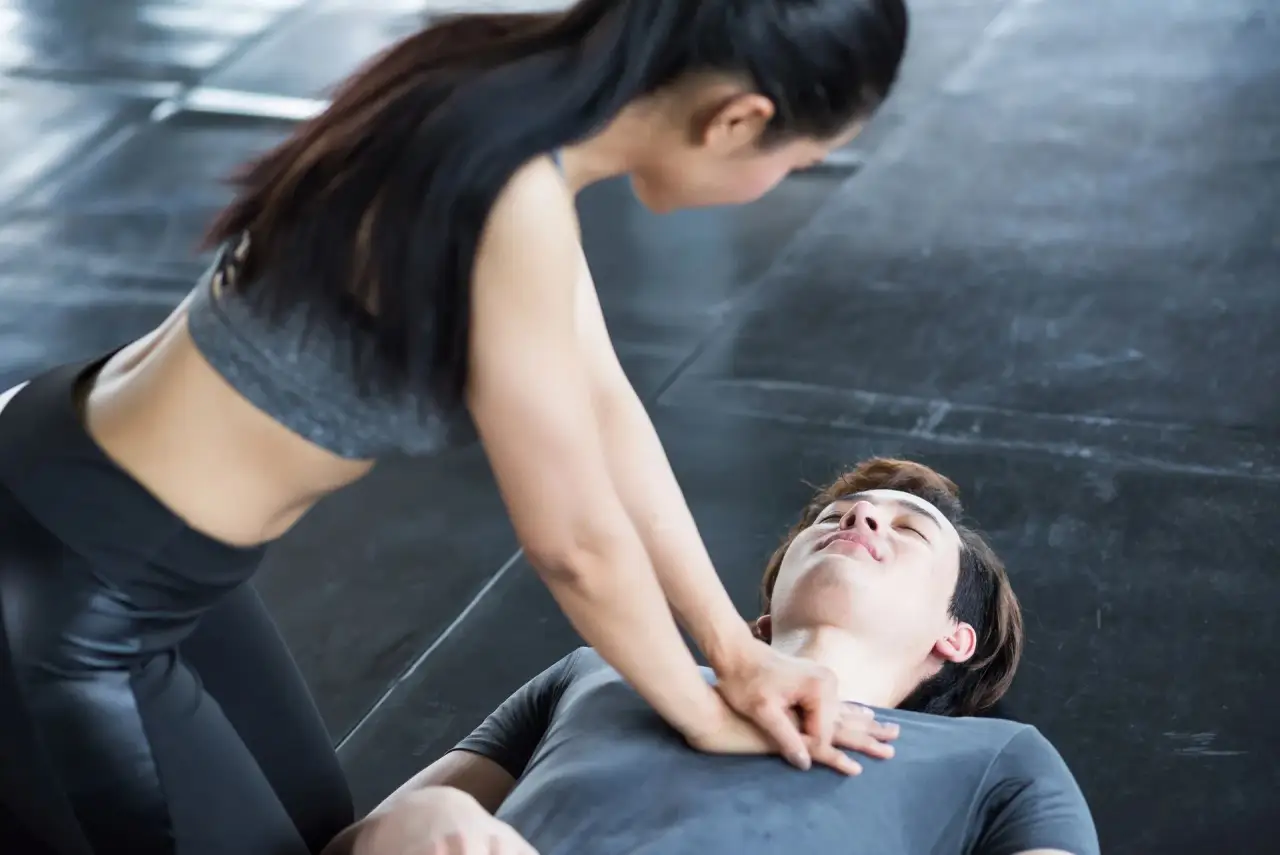
The team practiced CPR skills for adults and children, including how to respond when a person is unresponsive and not breathing normally.
Pediatric readiness was especially important because fitness studios may serve families, host youth programs, or welcome younger members during camps and special events. Even when children are not the primary audience, staff may still encounter a pediatric emergency.
AED Use and Cardiac Arrest Recognition
Staff learned how to recognize a possible cardiac arrest, activate 911, begin CPR, and integrate an AED into the response.
The hands-on portion allowed employees to become familiar with the sequence of opening the AED, applying training pads, following the device prompts, and continuing care as directed. Practicing these steps can make the equipment feel more approachable during a stressful event.
The course was aligned with recognized Red Cross and HSI training programs, with an emphasis on practical skills and real-world decision-making.
Choking Response
The training included choking response for adults and children. This is an important skill for front-desk teams and coaches because choking can happen anywhere, not only during exercise.
Staff discussed how to identify a severe airway obstruction, when to act, and when to call for emergency help. The team also considered how to communicate with other employees while responding.
Stop Life-Threatening Bleeding
The studio also included Stop Life-Threatening Bleeding instruction in its preparedness plan.
A serious injury can happen quickly in a fitness environment. Staff practiced recognizing life-threatening bleeding and reviewed how to apply direct pressure, use wound-packing techniques when appropriate, and apply a tourniquet when necessary.
The purpose was not to turn coaches into medical professionals. It was to give them the skills to provide immediate care while emergency responders are on the way.
Why Blended Learning Worked for a Busy Coaching Team
Scheduling can be one of the biggest challenges when a studio has multiple coaches, changing class times, and front-desk coverage to maintain.
Blended learning helped solve that problem. Staff completed the online portion independently, allowing them to review course information around their existing schedules. They could work through the lessons before or after coaching sessions, during an administrative block, or on another convenient day.
The team then gathered for one in-person skills session at the studio.
That hands-on meeting was essential. Online learning can introduce concepts, but physical practice helps participants become familiar with CPR technique, AED operation, choking response, and bleeding-control equipment.
Training at the studio also made the experience more specific. Instead of imagining an emergency in an unfamiliar classroom, staff practiced around the front desk, exercise floor, equipment areas, and AED location they already knew.
One Mobile Training Visit Made the Process Easier
Because the training provider brought the equipment to the studio, the team did not need to coordinate multiple trips across town.
I personally lead every class and arrive with the training manikins, AED trainers, first aid materials, and other supplies needed for the skills session. The studio provided the space, and employees attended during a coordinated block of time.
That convenience is one reason mobile CPR training in San Diego and surrounding communities can be a good fit for small businesses. A mobile class can reduce scheduling friction for teams that cannot easily close their doors or send employees away during operating hours.
It can also help organizations train staff in the setting where they are most likely to respond.
Turning Training Into a Studio-Wide Safety Routine
The Temecula studio's preparation did not end when the skills session was complete. The team also reviewed several practical questions:
- Where is the AED located?
- Is the AED easy to reach and clearly identified?
- Who calls 911?
- Who brings the AED to the member?
- Who meets responding paramedics?
- How will the studio protect the privacy and dignity of other members?
- Where are first aid and bleeding-control supplies stored?
- How will certification dates and refresher needs be tracked?
A short staff discussion can reveal gaps that are easy to overlook during normal operations. For example, a coach may know where the AED is but not know who has the key to an access cabinet. A front-desk employee may be able to call 911 but may not know the best entrance for EMS access.
Preparedness works best when responsibilities are clear before an emergency happens.
On-Site First Aid Training for Offices and Gyms
The same approach can help other local organizations prepare their teams.
I come to you — Code Blue Safety Skills provides on-site first aid training for offices, gyms, schools, daycares, fitness centers, healthcare facilities, and community organizations throughout San Diego County, Temecula, Murrieta, Menifee, and Lake Elsinore. Courses can be arranged for individuals or groups and may include:
- First Aid, CPR, and AED for adults, children, and infants
- Basic Life Support
- Stop Life-Threatening Bleeding
- Pediatric First Aid and CPR/AED
- Certification renewals
- Blended online and in-person training
Preparing Before the Fall Rush
The studio's decision was simple but meaningful: prepare the staff before the schedule became crowded.
By combining online coursework with a hands-on session at the facility, the team made room for training without requiring everyone to rearrange their workweek. By including CPR, AED use, choking response, pediatric skills, and Stop Life-Threatening Bleeding, the studio addressed several realistic emergencies in one coordinated plan.
For fitness business owners, the lesson is straightforward. Emergency readiness should be part of opening procedures, staff onboarding, and seasonal planning — not something postponed until after an incident.
Code Blue Safety Skills offers appointment-only mobile training. To request a class, contact me by email or phone and include the specific dates you want for the class, along with your preferred course, location, and approximate group size.
You can also review the available First Aid, CPR, AED, BLS, and Stop Life-Threatening Bleeding courses before scheduling.
When training comes to your location, your team can practice the skills that matter in the environment where they may be needed most.
Explore Topics
Written by
David Onori
David Onori is a Trained Emergency Medical Responder (EMR) and Red Cross & HSI certified CPR and First Aid instructor serving Temecula, Murrieta, San Diego, and surrounding Southern California communities. He is a member of the Red Cross Ready Rating Business program. Every class is taught onsite — he comes to you.