Sudden Cardiac Arrest Awareness Month 2026: How San Diego County and Southwest Riverside Communities Are Getting Ready to Respond
· 7 min read · David Onori
Every October, Sudden Cardiac Arrest Awareness Month reminds communities that emergency readiness is not only the responsibility of paramedics, hospitals, or fire departments. It begins with ordinary people who recognize a crisis, call 911, start CPR, and use an AED before professional help arrives.
In 2026, that message is gaining national momentum through free public events, workplace planning initiatives, and local CPR awareness efforts. For families, schools, businesses, gyms, faith organizations, and community groups across San Diego County, Temecula, Murrieta, Menifee, and Lake Elsinore, the central question is simple:
If someone collapsed from sudden cardiac arrest today, would the people nearby know what to do?
I work with local individuals and organizations to close that confidence gap through hands-on, practical First Aid and CPR/AED training.
A National Push to Become Ready to Respond
The Sudden Cardiac Arrest Foundation is hosting its second annual Ready to Respond program throughout October 2026. More than 84 free events are scheduled nationwide in locations such as libraries, fire departments, schools, art galleries, and other community settings.
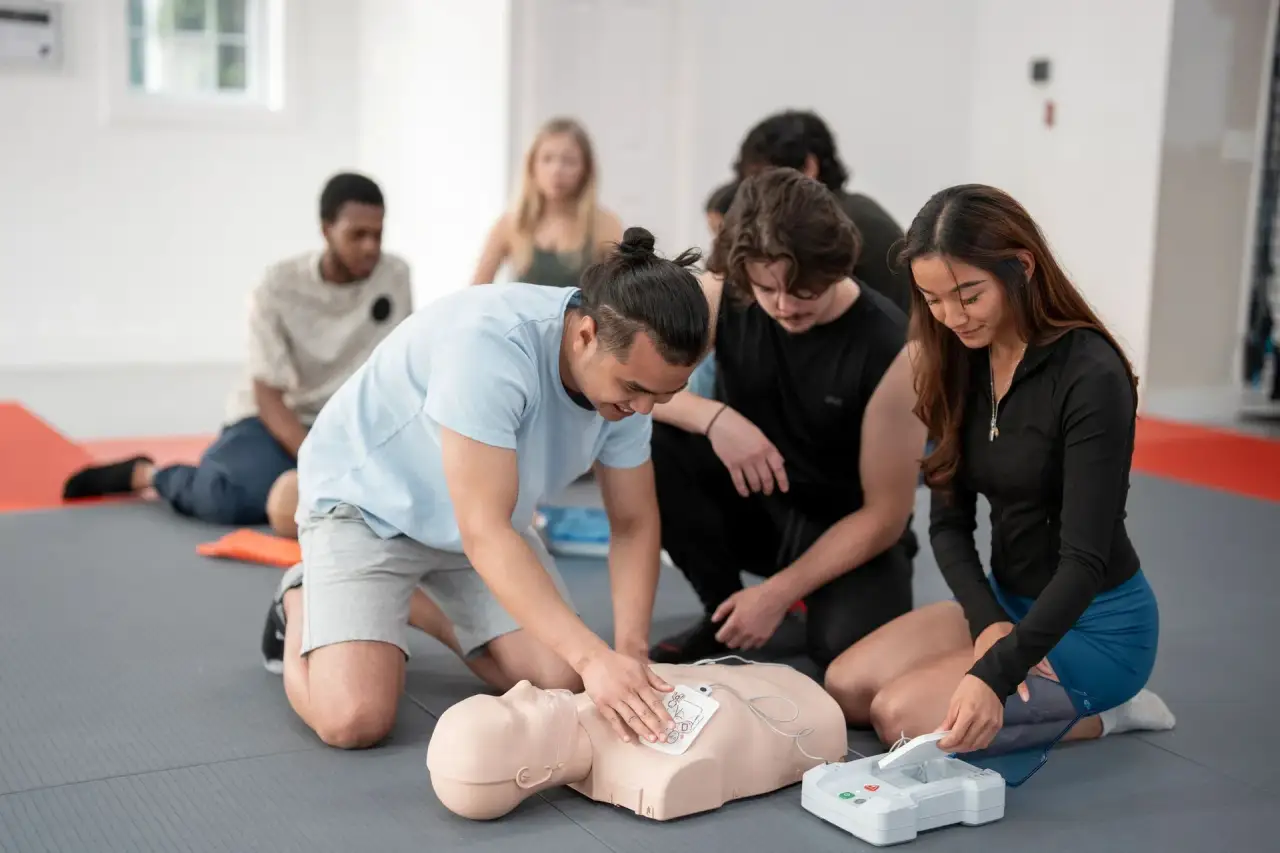
The goal is to teach participants how to perform hands-only CPR, locate and use an automated external defibrillator, and take action while emergency services are on the way.
The 2026 program builds on strong participation in 2025, when Ready to Respond held 97 events and trained 8,891 people.
The need is significant. More than 356,000 out-of-hospital cardiac arrests occur in the United States each year, and nearly 90% are fatal. Most cardiac arrests happen outside a hospital, often at home. As SCAF Executive Director Gina Peattie has emphasized, immediate CPR and AED use can double or triple a person's chance of survival.
That means the first responder may be a spouse, parent, coworker, teacher, coach, neighbor, or friend.
The Confidence Gap Remains the Challenge
Bystander CPR can double or triple survival, yet it is performed in fewer than half of out-of-hospital cardiac arrests.
The problem is not always a lack of concern. Often, people hesitate because they are afraid of doing something wrong. They may not know whether to begin compressions, where the AED is located, or how to coordinate with someone calling 911.
The American Heart Association's 2024 CPR Perceptions Survey found that only 39% of respondents felt “extremely” or “very” confident performing CPR. That is an improvement from 33% in 2021, but 61% of respondents still did not feel highly confident.
This is where practical training matters. Participants do not need to become paramedics to make a difference — they need an opportunity to practice the steps, ask questions, and repeat the skills until the response feels achievable.
Training through the American Red Cross or Health & Safety Institute (HSI) can include CPR, AED operation, and First Aid skills in a hands-on or blended format. For workplace certification, participants should confirm that the course includes the required in-person skills practice and assessment. Online-only instruction may not satisfy an employer or regulatory requirement.
San Diego Is Putting CPR Readiness in the Spotlight
The local focus was visible at the San Diego Heart Walk at Balboa Park on Saturday, September 19, 2026. About 5,000 people gathered, raising more than $1 million and participating in Hands-Only CPR education. Participants represented 81 local companies, with support from sponsors including Sharp HealthCare, Palomar Holdings, Dexcom, Rady Children's Health, and Qualcomm.
Events like the Heart Walk help normalize CPR training and remind residents that cardiac emergencies can affect any neighborhood. They also connect public awareness with the practical question of readiness at home, at work, and in community spaces.
For residents across San Diego County and Southwest Riverside County, October is an ideal time to refresh certification, organize a group class, or evaluate whether a facility is prepared to respond.
What a Cardiac Emergency Response Plan Looks Like
A cardiac emergency response plan, or CERP, is more than having an AED mounted on a wall. It is a written, site-specific process that explains what people should do, who is responsible for each step, and how the plan will be practiced.
The American Heart Association recently awarded more than $1.1 million in grants to implement CERPs at 185 sites across 30 states, reaching approximately 400,000 people. The grants support CPR training kits, AED installation and maintenance, and on-site CPR training. In 2025, 794 CERPs were implemented, impacting more than 1.6 million people, with more than 1,000 plans expected in 2026.
A practical plan for a local organization should include:
- Recognition and emergency activation: Staff should know how to identify an unresponsive person who is not breathing normally, call 911, and direct someone to retrieve the AED.
- Clearly assigned roles: One person calls 911, one begins CPR, one brings the AED, and another meets emergency responders. Assigning roles reduces confusion.
- AED access and maintenance: The AED should be easy to find, clearly marked, accessible during operating hours, and checked regularly for battery and pad expiration dates.
- Coverage during all operating hours: A plan is only useful if trained people are present during early shifts, evenings, weekends, field trips, practices, worship services, and special events.
- Hands-on drills: Employees, teachers, coaches, childcare providers, and volunteers should practice the response. Drills help people identify locked doors, unclear directions, missing supplies, or gaps in coverage.
- Regular review and retraining: Staff turnover, building changes, new equipment, and expired certifications can weaken a plan. Schedule periodic reviews and renewals.
These principles apply to a workplace, school, daycare, fitness center, church, synagogue, mosque, community center, or sports organization.
Why Training Density Matters More Than Equipment Alone
A community can purchase AEDs and still remain unprepared if too few people know where they are or feel confident using them.
McKinney, Texas, offers a notable example. After expanding community CPR/AED education, improving emergency dispatch support, placing AEDs in public facilities and police vehicles, and creating a neighborhood responder program, the city's cardiac survival rate rose from approximately 10% to 43% in one year — a reported increase of more than 300%.
The lesson is not that every community must copy McKinney's exact program. The lesson is that outcomes improve when training, equipment, communication, and coordinated response work together.
An AED does not replace a trained bystander. A written plan does not replace a drill. A certification card does not automatically create confidence. Communities become safer when more people are prepared to act.
Build Readiness Where You Live and Work
Sudden cardiac arrest can happen at home, during a workout, on a school campus, in a daycare, at a jobsite, or during a community event. October's awareness campaign is a timely reminder to move beyond awareness and build practical readiness.
I come to you — providing mobile training throughout San Diego County, Temecula, Murrieta, Menifee, and Lake Elsinore. I personally lead every class, bringing hands-on instruction to homes, businesses, schools, childcare facilities, gyms, healthcare settings, and community organizations.
Available services include:
- Mobile First Aid & CPR/AED training
- Pediatric First Aid & CPR/AED
- Basic Life Support (BLS)
- Stop Life-Threatening Bleeding
- Certification renewals
- Hands-on and blended learning options
- Individual and group training
- Mobile instruction at your location
Classes are available by appointment only. To schedule, email or call and include the specific dates you want for the class. Visit the Code Blue Safety Skills contact page to begin planning.
Whether you are a parent, caregiver, teacher, coach, employee, volunteer, or community member, training can help replace hesitation with action. For organizations, a mobile group class can be the first step toward a stronger cardiac emergency response plan.
The most prepared community is not the one with the most equipment. It is the one with the most people ready to use it.
Sources
- Sudden Cardiac Arrest Foundation: Ready to Respond 2026
- Sudden Cardiac Arrest Foundation
- American Heart Association Newsroom: Cardiac Emergency Response Plan grants
- American Red Cross CPR and AED training
- American Red Cross AED training
- Health & Safety Institute
- KERA: McKinney's cardiac survival improvement
- Code Blue Safety Skills
Explore Topics
Written by
David Onori
David Onori is a Trained Emergency Medical Responder (EMR) and Red Cross & HSI certified CPR and First Aid instructor serving Temecula, Murrieta, San Diego, and surrounding Southern California communities. He is a member of the Red Cross Ready Rating Business program. Every class is taught onsite — he comes to you.