Stop the Bleed Training: What It Is, Who Needs It, and How to Get Certified in San Diego
· 7 min read · David Onori
Stop the Bleed Training: What It Is, Who Needs It, and How to Get Certified in San Diego
Uncontrolled bleeding is one of the leading causes of preventable death following a traumatic injury. Whether the cause is a workplace accident, a car crash, a sports injury, or a mass casualty event, the minutes before emergency medical services arrive are critical.
Stop the Bleed is a national bleeding-control awareness and training program developed to give ordinary people the knowledge and hands-on skills to act in those first critical minutes. The program was created in response to research showing that bystanders who know how to control severe bleeding can save lives before paramedics arrive.
I offer Stop the Bleed training throughout San Diego County, Temecula, Murrieta, Menifee, Lake Elsinore, and Rainbow, CA. Here is what the course covers, who should take it, and what to expect.
What Is Stop the Bleed?
Stop the Bleed is a public awareness campaign and hands-on training program launched by the American College of Surgeons in partnership with the U.S. Department of Homeland Security. It was developed following the 2012 Hartford Consensus, a collaboration between law enforcement, emergency medicine, and trauma surgery professionals who studied survivability in mass casualty incidents.
The core finding was straightforward: many people who die from traumatic injuries bleed to death from wounds that could have been controlled by a trained bystander. Stop the Bleed was designed to address that gap by teaching the public three essential bleeding-control techniques.
The program is not a substitute for professional emergency medical care. It is a bridge — a set of skills that can keep someone alive until EMS arrives.
The Three Core Skills
Stop the Bleed training focuses on three techniques for controlling life-threatening external bleeding.
1. Direct Pressure
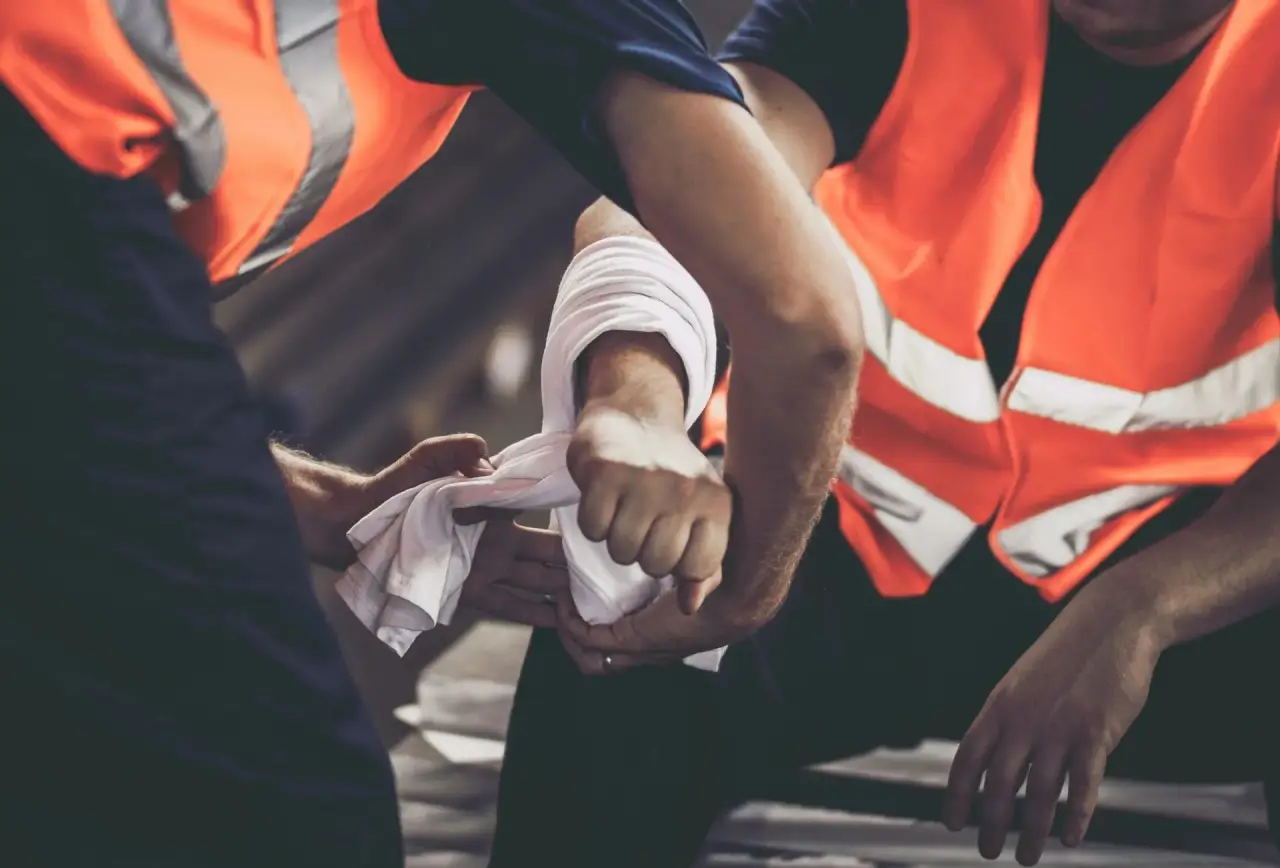
For many wounds, firm and sustained direct pressure is the most effective first step. Learners practice applying pressure with their hands or a cloth, maintaining consistent force, and resisting the urge to lift and check the wound — which can disrupt clotting.
2. Wound Packing
For deep wounds where direct surface pressure is not sufficient — such as a stab wound, gunshot wound, or deep laceration in the groin, armpit, or neck — wound packing is the appropriate technique. Learners practice inserting gauze or other material firmly into the wound cavity and applying sustained pressure from inside the wound.
This technique is unfamiliar to most people and requires hands-on practice to perform correctly under stress. That is why classroom instruction alone is not enough — learners need to practice the physical motion on a training model before they need it in a real situation.
3. Tourniquet Application
For severe bleeding from an arm or leg that cannot be controlled by pressure alone, a tourniquet is the most effective intervention. Learners practice applying a commercial tourniquet — such as a CAT or SOFTT-W — correctly and tightening it until the bleeding stops.
Common errors include applying the tourniquet too loosely, placing it too close to the wound, or hesitating to tighten it fully because of concern about pain or injury. Stop the Bleed training addresses these errors directly and gives learners the confidence to apply a tourniquet decisively when it is needed.
Who Should Take Stop the Bleed Training?
The short answer is: almost anyone who spends time around other people.
Stop the Bleed is not a healthcare course. It is designed for the general public — people with no medical background who may find themselves as the first person on the scene of a traumatic injury.
Groups that benefit most from Stop the Bleed training include:
Workplaces and employers
Occupational injuries involving severe lacerations, crush injuries, or equipment accidents can produce life-threatening bleeding. OSHA requires employers to have first aid resources available, and bleeding-control training is a meaningful addition to any workplace safety program. Manufacturing, construction, landscaping, food service, and warehouse environments are especially relevant.
Schools and educational staff
Teachers, administrators, coaches, and school safety officers are often the first adults on the scene of a student injury. Many schools that have adopted bleeding-control kits alongside AEDs are also training staff to use them.
Fitness facilities and athletic programs
Gyms, sports clubs, martial arts studios, and athletic training facilities see a range of injuries. Coaches, trainers, and facility staff who already hold CPR and AED certifications are natural candidates for Stop the Bleed training.
Faith communities and houses of worship
Churches, mosques, synagogues, and community centers often host large gatherings. Safety teams and volunteer staff benefit from knowing how to respond to a traumatic injury in a crowded environment.
Healthcare-adjacent roles
Medical assistants, dental assistants, veterinary staff, and others who work in clinical settings but are not trained as emergency responders may encounter bleeding emergencies and benefit from this training.
Parents and caregivers
Household accidents, yard injuries, and vehicle accidents can produce serious lacerations. Parents and caregivers who already know CPR and first aid are well-positioned to add bleeding-control skills.
Community organizations and nonprofits
Boys and Girls Clubs, youth sports leagues, community centers, and volunteer organizations that serve the public benefit from having trained members on-site.
What to Expect in a Stop the Bleed Class
A standard Stop the Bleed class typically runs 60 to 90 minutes. The course is designed to be accessible — no prior medical training is required, and the skills can be learned by most adults and older teenagers.
The class covers:
- How to recognize life-threatening external bleeding
- When to call 911 and what to tell the dispatcher
- How to protect yourself while providing care
- Direct pressure technique and when to use it
- Wound packing technique and how to perform it correctly
- Tourniquet application, including how to select the right type and apply it properly
- What to do while waiting for EMS
Hands-on practice is a core part of the class. Learners practice each technique on training models so they can build muscle memory and confidence before they need the skill in a real situation.
I bring all necessary training materials and equipment to your location. Classes can be scheduled for small groups, large teams, or individual participants by appointment.
Bleeding Control Kits: What to Have on Hand
Stop the Bleed training is most effective when paired with accessible bleeding-control supplies. Many organizations that have completed training also install bleeding-control kits in their facilities — similar to how AEDs are mounted in public spaces.
A basic bleeding-control kit typically includes:
- Nitrile gloves
- Compressed gauze or hemostatic gauze
- A tourniquet (CAT or SOFTT-W)
- Pressure bandages
- Permanent marker (for noting tourniquet application time)
- Instructions or reference card
Kits are available from several suppliers and can be mounted in wall cabinets similar to AED enclosures. If your organization is considering adding bleeding-control kits, I can advise on placement and ensure your team knows how to use every item in the kit.
Stop the Bleed and CPR: A Complete Response
Stop the Bleed training pairs naturally with CPR and AED certification. Together, these skills address the two most common causes of preventable death in a traumatic emergency: cardiac arrest and uncontrolled bleeding.
Many organizations schedule both courses together — a CPR/AED class in the morning and a Stop the Bleed class in the afternoon — so staff leave with a complete set of emergency response skills in a single training day.
I offer First Aid, CPR, AED, BLS, and Stop the Bleed training throughout San Diego County, Temecula, Murrieta, Menifee, Lake Elsinore, and Rainbow, CA. Mobile instruction is available — I come to your workplace, school, facility, or community organization.
Schedule Stop the Bleed Training
If your organization is ready to add bleeding-control training, or if you want to combine it with a CPR and first aid class, view available courses here or contact me to book a class.
Classes are scheduled by appointment. Include your preferred dates, location, group size, and whether you want Stop the Bleed as a standalone class or combined with CPR and first aid training.
Knowing what to do in the first few minutes of a bleeding emergency is a skill that can save a life. The training takes less than two hours — and it is worth it.
Explore Topics
Written by
David Onori
David Onori is a Trained Emergency Medical Responder (EMR) and Red Cross & HSI certified CPR and First Aid instructor serving Temecula, Murrieta, San Diego, and surrounding Southern California communities. He is a member of the Red Cross Ready Rating Business program. Every class is taught onsite — he comes to you.