How to Stop Severe Bleeding: A Step-by-Step First Aid Guide Before Help Arrives
· 8 min read · David Onori
Severe bleeding can become fatal within minutes. Knowing what to do before emergency responders arrive can make a critical difference, but the priority is to act quickly, stay as calm as possible, and follow the skills you have been trained to use.
This guide explains how to recognize life-threatening bleeding, when to call 911, how to apply direct pressure, when wound packing or a tourniquet may be appropriate, and common mistakes to avoid.
Important: This article is for general education and does not replace hands-on training or professional medical advice. Call 911 immediately for life-threatening bleeding and follow the instructions of the dispatcher.
How to Recognize Life-Threatening Bleeding
Not every cut requires emergency intervention. Severe bleeding may be present when you see:
- Blood flowing continuously or rapidly
- Blood spurting or pulsing from a wound
- A large amount of blood pooling around the injured person
- Clothing becoming heavily soaked with blood
- A traumatic amputation or partial amputation
- Bleeding that does not slow with firm pressure
- Signs of shock, including pale or clammy skin, weakness, confusion, rapid breathing, or extreme anxiety
Bleeding may also be life-threatening when it occurs in areas such as the neck, groin, armpit, scalp, or upper thigh. These areas may not be suitable for a standard limb tourniquet and can require trained wound-packing techniques.
Step 1: Check the Scene and Protect Yourself
Before approaching, quickly check whether the scene is safe. Look for traffic, fire, weapons, electrical hazards, unstable structures, or anything else that could put you in danger.
If available, put on disposable gloves or use another barrier, such as a plastic bag. Personal protective equipment can reduce exposure to blood, but do not spend excessive time searching for gloves if the bleeding is severe. Immediate care is more important.
Ask the injured person what happened if they are responsive. Quickly identify where the bleeding is coming from and whether there may be more than one serious wound.
Step 2: Call 911 Immediately
Life-threatening bleeding requires emergency medical care. Call 911 as soon as possible, or point to a specific person and say, “You, call 911 and put the phone on speaker.”
Tell the dispatcher:
- Your exact location
- That the person has severe bleeding
- Where the bleeding is located
- Whether the person is conscious and breathing
- What care has already been provided
If you are alone, use speakerphone while beginning bleeding control. Follow the dispatcher's instructions until emergency responders arrive.
The American Red Cross describes this general approach as Check, Call, Care: check the scene and person, call for emergency help, and provide care based on your training. You can review the Red Cross guidance on life-threatening external bleeding.
Step 3: Apply Firm, Direct Pressure
Direct pressure is usually the first and most important action for external bleeding.
- Expose the wound if possible so you can identify the source of bleeding.
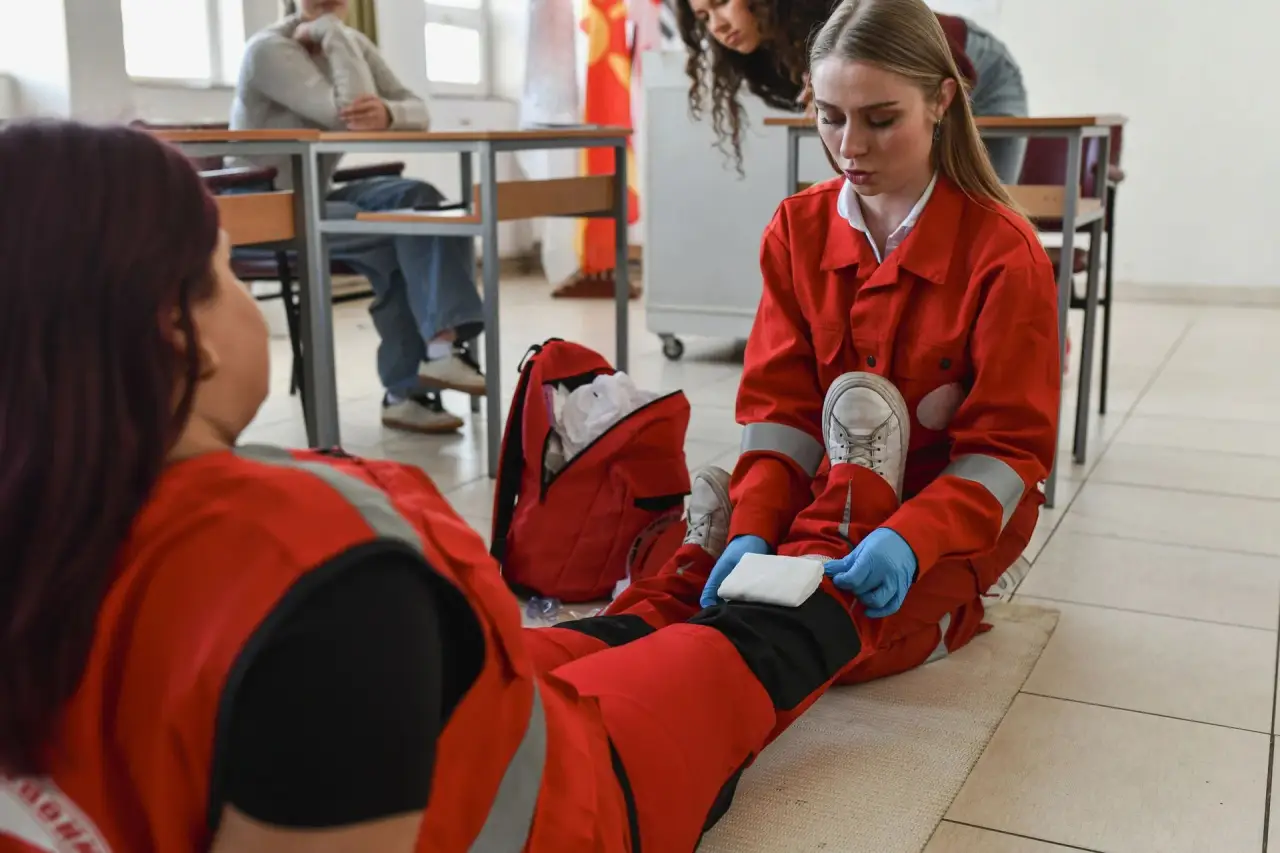
- Place gauze, a dressing, or the cleanest available cloth directly over the wound.
- Press firmly with the palm of your hand.
- Maintain continuous pressure without repeatedly lifting the dressing to check the wound.
- Continue until the bleeding stops, another trained person takes over, or a tourniquet is applied correctly to a bleeding limb.
The pressure must be firm and uninterrupted. Lightly resting a hand over the dressing is not enough to control severe bleeding.
If blood soaks through the dressing, do not remove the original dressing. Place another dressing or cloth over it and continue pressing. Removing the first layer can disturb clots that are beginning to form.
If an object — such as glass or a knife — is embedded in the wound, do not pull it out. Apply pressure around the object and stabilize it with dressings while waiting for EMS.
Step 4: Use a Tourniquet for Severe Arm or Leg Bleeding
A commercial tourniquet may be used for life-threatening bleeding from an arm or leg, especially when direct pressure is not controlling the bleeding or the injury makes continuous pressure difficult.
Use a commercial tourniquet whenever one is available and you are trained to use it. In general:
- Place the tourniquet above the wound, between the wound and the torso.
- Do not place it directly over a joint.
- Tighten it until the bleeding stops.
- Secure it according to the device instructions.
- Note the time it was applied and tell EMS.
- Do not loosen, remove, or periodically release the tourniquet once it is controlling the bleeding.
A properly applied tourniquet can be painful. Pain is not a reason to loosen it. The goal is to stop life-threatening blood loss until emergency responders can provide definitive care.
If the exact location of the wound is unclear or the situation is changing rapidly, follow your training and the emergency dispatcher's instructions. Tourniquet application is a skill best learned through hands-on practice, not from reading alone.
Step 5: Pack a Wound When Appropriate and Trained
Wound packing may be used for certain deep wounds in areas where a tourniquet cannot be applied, including the groin, armpit, shoulder, neck, or back. It may also be considered for a severe limb wound when a tourniquet is unavailable or cannot be used.
Wound packing involves placing gauze or a hemostatic dressing deep into the wound cavity and then maintaining firm pressure over the packed wound. This technique requires specific training and practice.
If you have not been trained in wound packing, do not experiment during an emergency. Continue applying strong, direct pressure with available gauze or cloth and follow the dispatcher's instructions.
Training programs such as Red Cross First Aid for Severe Bleeding teach participants how and when to use direct pressure, wound packing, hemostatic dressings, and tourniquets.
Step 6: Monitor the Person for Shock
A person who has lost a significant amount of blood may develop shock. While maintaining bleeding control:
- Have the person lie down if possible and appropriate.
- Keep them warm with a jacket or blanket.
- Reassure them and encourage them to remain still.
- Monitor their breathing and responsiveness.
- Do not give them food, water, or medication.
- Be prepared to provide CPR if they become unresponsive and are not breathing normally.
Do not leave the injured person alone unless you must get help or move away from an immediate danger. Continue applying pressure until EMS takes over.
Common Mistakes to Avoid
- Waiting to call 911: Do not spend several minutes trying different techniques before contacting emergency services. Call early, then begin care.
- Checking the wound repeatedly: Lifting the dressing to see whether bleeding has stopped can disrupt a developing clot. Keep pressure in place.
- Removing blood-soaked dressings: Add more material on top instead of removing the original layer.
- Using an improvised tourniquet without training: Belts, scarves, cords, and similar items may not work effectively and can cause additional injury. Use a commercial tourniquet when possible and follow your training.
- Loosening a tourniquet: Once a tourniquet has stopped life-threatening bleeding, leave it in place for EMS. Do not loosen it to “let the blood flow” or check the wound.
- Removing an embedded object: Leave impaled objects in place. Apply pressure around them and stabilize the object as best you can.
- Trying to clean a severe wound first: Do not waste time washing, disinfecting, or inspecting a life-threatening wound before controlling the bleeding.
Prepare Before an Emergency Happens
A bleeding-control kit can include:
- Disposable gloves
- Gauze dressings
- Pressure bandages
- Commercial tourniquets
- Hemostatic gauze
- Trauma shears
- A marker for recording tourniquet application time
Supplies are useful, but training is what helps you use them correctly under stress. I offer hands-on Stop Life-Threatening Bleeding training through Code Blue Safety Skills, covering recognition of severe bleeding, direct pressure, wound packing, tourniquet application, calling for help, and staying calm during an emergency.
I also provide First Aid, CPR, and AED training, Basic Life Support, Pediatric First Aid and CPR/AED, and certification renewals through American Red Cross and HSI training programs. Courses are designed for individuals, caregivers, schools, workplaces, community groups, and healthcare teams.
I come to you — mobile training at your location, with flexible options for group sessions and blended learning where online coursework is combined with practical, in-person skills practice.
Get Trained in San Diego County and Surrounding Areas
Code Blue Safety Skills serves San Diego County, Temecula, Murrieta, Menifee, Lake Elsinore, and surrounding communities. Training is available for individuals and groups, including schools, daycare centers, offices, churches, fitness facilities, and healthcare organizations.
Appointments are scheduled in advance. To request a class, email d.onori@codebluesafetyskills.com or call (951) 669-4177, and include the specific dates you want for the class, along with your preferred course and approximate group size. You can also request an appointment online.
The best time to learn bleeding-control skills is before an emergency occurs. Hands-on practice can help you respond faster, use equipment more confidently, and provide meaningful care while professional help is on the way.
Explore Topics
Written by
David Onori
David Onori is a Trained Emergency Medical Responder (EMR) and Red Cross & HSI certified CPR and First Aid instructor serving Temecula, Murrieta, San Diego, and surrounding Southern California communities. He is a member of the Red Cross Ready Rating Business program. Every class is taught onsite — he comes to you.