The New Red Cross CPR & First Aid Curriculum Is Officially Here: What the 2026 Updates Mean for Your Certification
· 8 min read · David Onori
If you are planning to earn or renew a CPR and First Aid certification in 2026, the course you take may look different from the one you completed previously.
The American Red Cross has officially transitioned to its updated First Aid/CPR/AED curriculum. The program was released in December 2025, and Red Cross instructors were required to complete update training by August 31, 2026. That transition deadline has now passed, making the updated curriculum the standard for new Red Cross First Aid/CPR/AED certifications.
The Red Cross has also introduced updated r.25 Resuscitation Suite programs for Basic Life Support (BLS), Advanced Life Support (ALS), and Pediatric Advanced Life Support (PALS). Meanwhile, Health & Safety Institute (HSI) programs are being updated to align with the latest 2025 guideline science, with additional curriculum revisions expected later in 2026.
At Code Blue Safety Skills, I teach both Red Cross and HSI programs and closely monitor these changes so my students receive current, guideline-aligned instruction.
The Red Cross First Aid/CPR/AED Transition Is Complete
The updated Red Cross First Aid/CPR/AED program was released on December 2, 2025. Instructors could continue teaching the prior version through August 31, 2026, but only the updated curriculum is permitted for new basic-level courses beginning September 1, 2026.
For students, this means the most important question is no longer whether a training provider is “switching over.” The transition should already be complete.
When registering for a class, confirm that your provider is teaching the current Red Cross curriculum. This is especially important for workplaces, schools, child-care programs, healthcare facilities, and other organizations that need documentation showing current training.
A currently valid certificate is not generally erased simply because a curriculum has been updated. However, employers, licensing agencies, and regulators may require a specific program or current certification period. If your certificate is expiring soon, renewing under the latest curriculum is the best way to support your compliance and your practical readiness.
What Changed in the Updated Red Cross Curriculum
The updated program focuses on more hands-on practice, expanded emergency topics, and clearer connections between training and real-world response.
1. More Hands-On Practice With a 1:2 Student-to-Manikin Ratio
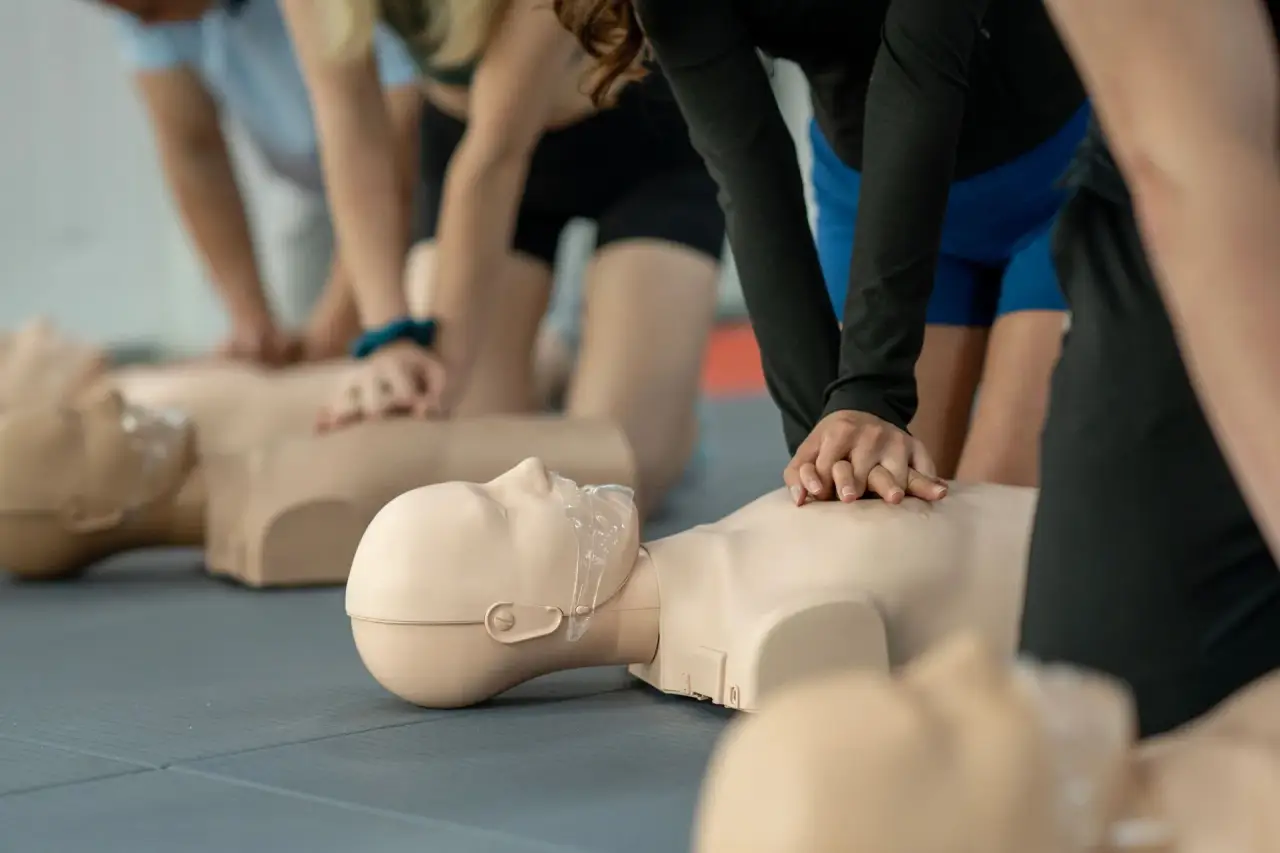
The updated curriculum uses a target of one manikin for every two students. This gives learners more opportunities to practice compressions, ventilations, AED use, choking response, and other skills instead of spending most of the class watching someone else perform them.
For students, the benefit is simple: more repetitions build better technique and confidence.
For organizations scheduling group training, the ratio also matters when planning space, equipment, and class size. I arrive with enough equipment to keep every participant actively involved — that is part of what makes mobile, on-site training effective.
2. Sickle Cell Anemia Is Now Included
Sickle cell anemia has been added as a covered topic in the basic-level First Aid/CPR/AED curriculum.
The inclusion reflects the importance of recognizing serious medical conditions that may affect people in workplaces, schools, athletic programs, child-care settings, and community environments. Students learn to recognize concerning symptoms and provide appropriate supportive care while activating emergency medical services.
This addition is particularly relevant for teachers, coaches, childcare providers, fitness professionals, and anyone responsible for the safety of groups.
3. Updated Skill Boost Terminology and Options
The Red Cross has expanded the way instructors can customize training through instructor-led Skill Boosts. These supplemental modules allow a class to address risks that are especially relevant to a workplace or community.
Possible topics include:
- Life-threatening bleeding and tourniquet use
- Anaphylaxis response
- Opioid overdose response
- Naloxone administration
- Other targeted emergency preparedness topics
For example, a school may want to add bleeding control and opioid overdose response to its staff training. A fitness center may prioritize cardiac emergencies, AED readiness, and anaphylaxis. A business may benefit from a combination of CPR, First Aid, and bleeding control.
4. Updated Naloxone and Opioid Emergency Content
Naloxone content has been updated to better support recognition of opioid emergencies and appropriate first aid response.
The goal is not to turn basic-level students into medical professionals. Instead, learners receive practical guidance on recognizing a suspected opioid overdose, activating emergency services, providing resuscitation support when needed, and using naloxone according to the training program and available device instructions.
This is an important addition for community members, families, schools, offices, and public-facing organizations.
5. Infant CPR Skills Have Been Refreshed
The updated Red Cross curriculum changes the infant CPR compression approach. Students may be taught to use either the encircling-thumbs technique or a one-hand method, depending on the situation and the training program's skill instructions.
These techniques are practiced on infant manikins so students can develop appropriate hand placement, compression technique, and coordination.
Red Cross BLS, ALS, and PALS Also Moved to r.25
The Red Cross launched updated r.25 BLS, ALS, and PALS programs in February 2026. These programs are designed for healthcare professionals and other qualified clinicians who respond to time-critical emergencies.
A major feature is the Resuscitation Suite app, which brings digital reference materials and updated algorithms into one platform. The app supports training and can serve as a cognitive aid during clinical events when used appropriately within local protocols and scope of practice.
The r.25 updates emphasize:
- Practice-as-you-perform scenarios
- Healthcare and EMS-specific learning tracks
- Case-based training
- Adaptive learning and testing
- Digital code cards and reference materials
- Updated ILCOR-aligned resuscitation algorithms
In September 2026, the Resuscitation Suite app received another update that enhanced tachycardia and bradycardia algorithms for both pediatric and adult patients.
For BLS, ALS, and PALS learners, this means the digital tools used during training are becoming a more integrated part of the overall learning experience, not simply an optional reference after class.
HSI Programs Are Also Being Updated
Code Blue Safety Skills teaches HSI programs in addition to Red Cross courses. HSI is updating its First Aid, CPR/AED, and related programs to conform to the 2025 guideline science.
HSI's updated materials are being introduced through 2026, and further curriculum revisions are expected later in the year. Training centers and instructors should continue monitoring official HSI program communications, instructor updates, and material releases.
If your employer specifically requires HSI certification, ask your training provider whether the course uses the current HSI materials and whether the instructor has completed the required update process.
What the 2026 ILCOR Updates Mean for First Aid Skills
The 2026 ILCOR Consensus on Science With Treatment Recommendations includes important first aid updates that influence modern Red Cross and HSI education.
One example is the conscious choking response sequence:
- Encourage the person to cough if they can cough effectively
- If the obstruction is severe and coughing is ineffective, provide back blows
- Use abdominal thrusts as needed if back blows do not relieve the obstruction
- If the person becomes unresponsive, activate emergency services and begin CPR according to training
Infants require a different approach, which is why hands-on practice is essential.
ILCOR also updated guidance related to oxygen use. Supplemental oxygen should not be treated as a universal response for every medical complaint. It should be used by people trained to administer it, in appropriate situations, and according to current protocols and equipment instructions.
These changes illustrate why periodic certification and skills practice matter. Emergency response guidance continues to develop as evidence is reviewed.
What This Means for Your 2026 Safety Goals and Certification
If certification is one of your 2026 safety goals, consider these steps:
- Confirm whether your employer requires Red Cross or HSI training
- Ask which curriculum version will be taught
- Choose a course with meaningful hands-on practice
- Verify that the instructor and training provider are current
- Consider adding Skill Boosts relevant to your workplace
- Schedule renewals before your current certification expires
- Keep AEDs, first aid kits, bleeding-control supplies, and emergency policies current
For businesses looking for on-site first aid training, mobile instruction can make the transition easier. I bring the equipment and come directly to your workplace, school, home, or community location — there is no need to coordinate travel or pull your team off-site.
I provide mobile CPR and First Aid training throughout San Diego County, Temecula, Murrieta, Menifee, and Lake Elsinore. My courses are available for individuals and groups, with flexible options that may include classroom-only or blended learning.
Stay Current With Code Blue Safety Skills
Certification is more than receiving a card. It is about building the knowledge, physical skills, and confidence to respond when someone is injured or experiencing a medical emergency.
The updated Red Cross and HSI programs reflect that goal through more practical training, updated emergency topics, expanded digital tools, and closer alignment with current ILCOR science.
If you need mobile CPR training in San Diego or service in the surrounding communities, call or text me at (951) 669-4177 or use the contact form at codebluesafetyskills.com to discuss the right course for your needs. Classes are by appointment only — include the specific dates you want, your preferred location, group size, and course needs when you reach out.
You can also review the Red Cross announcement about the updated First Aid/CPR/AED program, explore the Red Cross First Aid Guidelines Database, read about the updated Resuscitation Suite programs, and monitor HSI emergency care updates.
Staying current is part of being prepared. In 2026, make sure your certification — and your practical skills — are current with the standards your organization relies on.
Explore Topics
Written by
David Onori
David Onori is a Trained Emergency Medical Responder (EMR) and Red Cross & HSI certified CPR and First Aid instructor serving Temecula, Murrieta, San Diego, and surrounding Southern California communities. He is a member of the Red Cross Ready Rating Business program. Every class is taught onsite — he comes to you.