Community Spotlight: How a Murrieta Parent Group Got Pediatric CPR-Ready Together
· 7 min read · David Onori
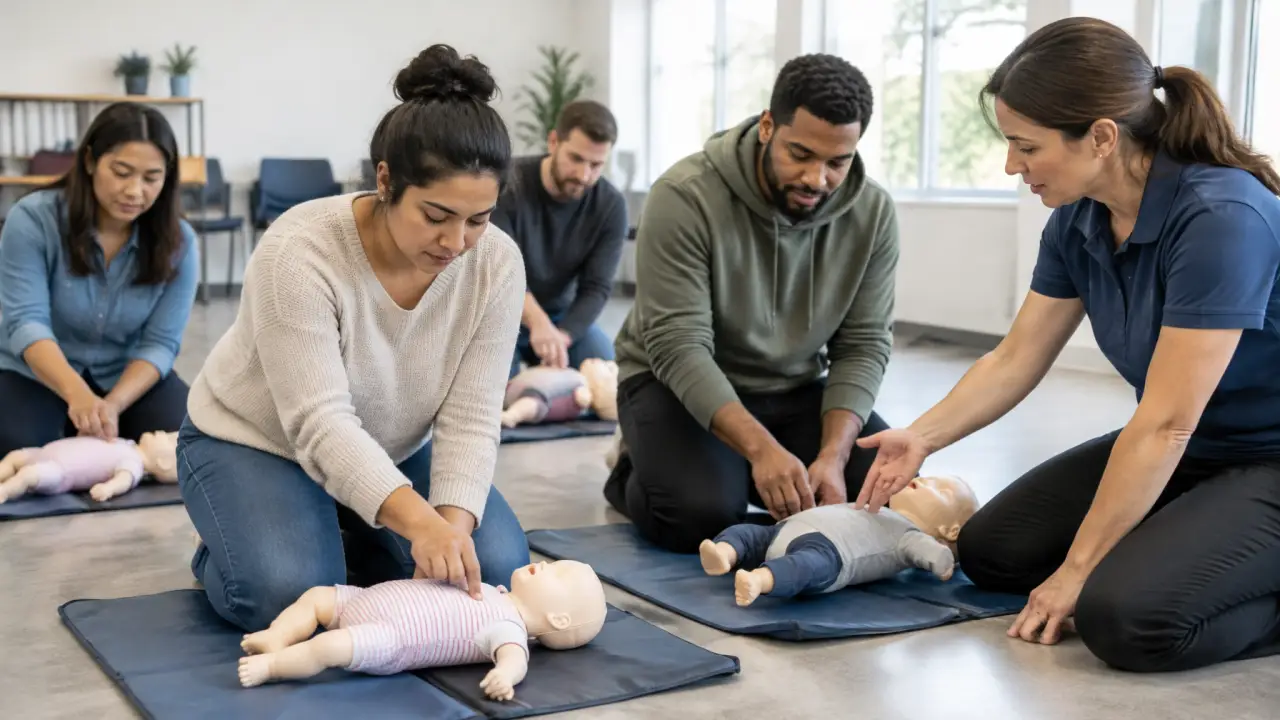
One evening, a Murrieta-area neighborhood parent group turned a familiar community space into a hands-on learning environment. Instead of asking each parent to find a separate class, arrange transportation, and coordinate different schedules, the group booked a private, mobile Pediatric First Aid & CPR/AED class that came directly to them.
The goal was simple: help parents, caregivers, and neighbors feel more prepared to respond if an infant or child experienced a choking emergency, breathing problem, serious injury, or cardiac emergency.
By the end of the session, participants had practiced on infant and child manikins, worked through choking-response scenarios, learned how an AED is used, and gained the confidence to take action while waiting for emergency responders.
A Community Class Built Around Real Family Needs
For many parents, pediatric CPR training is something they intend to complete “someday.” Work schedules, school drop-offs, childcare, and family responsibilities can make that day difficult to find.
The Murrieta group solved that problem by organizing training around the community rather than requiring every participant to travel to a separate training facility. I brought the equipment, manikins, AED training devices, and course materials directly to the group's location.
That approach made it easier for neighbors to participate together and created a shared learning experience. Parents could ask questions based on situations they might encounter at home, in the backyard, at the pool, or while caring for someone else's child.
For families searching for pediatric CPR training for parents in San Diego, a private group class can be a convenient way to learn child and infant skills alongside people they already know and trust.
What the Evening Looked Like
The class began with an overview of how to recognize an emergency and quickly activate the local emergency response system. From there, the session moved into demonstrations and guided practice.
Infant and child CPR practice
Participants practiced CPR techniques on both infant and child manikins. This gave them the opportunity to understand how response techniques differ based on the age and size of the child.
Rather than only watching a demonstration, each participant had time to practice compressions, rescue breaths, and coordinated response steps. I provided feedback as participants worked through each skill.
That hands-on practice matters. In an emergency, people may feel overwhelmed by fear and uncertainty. Repeated practice helps replace hesitation with a clear response sequence.
Choking response
Choking was another major focus of the class. Parents and caregivers practiced age-appropriate responses for infants and children, including what to do when a child is responsive and what changes if the child becomes unresponsive.
The group also discussed common choking hazards and the importance of recognizing when a child cannot cough, speak, or breathe effectively. Practicing these responses in advance helped participants better understand what they may need to do under pressure.
AED demonstration
The group also received an introduction to AED use. I demonstrated how an automated external defibrillator provides voice prompts and guides a rescuer through the process.
Participants learned the importance of following the device's instructions, making sure no one is touching the person during analysis or shock delivery, and continuing to coordinate care with emergency responders.
An AED demonstration can be especially valuable for parents who have seen these devices in schools, gyms, offices, churches, or community buildings but have never used one.
Pediatric first aid scenarios
The class also addressed common pediatric first aid concerns, such as bleeding, burns, allergic reactions, and other sudden illnesses or injuries. Scenario-based practice encouraged participants to think through what they would notice first, when to call 911, and how to provide care until help arrives.
The emphasis was not on memorizing information in isolation. It was on building practical skills that can be applied in a real home or community setting.
Why Group Classes Work So Well
A group class can turn safety training into a community-strengthening experience. Parents learn together, encourage one another, and leave with a common understanding of how to respond during an emergency.
Group training also makes it easier to include more than just parents. A neighborhood class may include:
- Parents and grandparents
- Babysitters and family caregivers
- Teachers and school staff
- Preschool and daycare employees
- Coaches and youth program volunteers
- Church nursery workers
- Community organization members
When several people in a child's circle receive training, the child has more prepared adults nearby. That shared readiness can make a meaningful difference when seconds matter.
There is also a practical scheduling advantage. I offer mobile training that can be arranged for evenings and weekends, depending on availability. Groups can select a location that is convenient for participants, such as a home, clubhouse, school, church, or workplace.
Blended Learning for Busy Parents and Caregivers
Some groups prefer a fully in-person class, while others choose blended learning. With a blended format, participants complete the knowledge portion online before meeting for an instructor-led, hands-on skills session.
This allows parents and caregivers to review course material at their own pace while preserving the in-person practice that makes CPR and first aid training effective.
During the skills session, participants can practice with the equipment, ask questions, receive coaching, and demonstrate the required skills. Blended learning may be a good option for groups with busy schedules or participants who live in different nearby communities.
I provide both blended and classroom-only options through Red Cross and HSI training programs. The best format depends on the group's needs, the course selected, and any certification requirements connected to a workplace, school, or childcare program.
You can review available course options on the Code Blue Safety Skills courses page. For additional background on pediatric first aid and CPR education, the American Red Cross parent training resources and the HSI Pediatric First Aid | CPR AED program are useful references.
Mobile Training Comes to Your Location
The Murrieta parent group did not have to arrange transportation for every participant or locate a public class with enough available seats. I brought the training directly to the group.
That same mobile model works for many other organizations, including:
- Schools and school staff
- Daycares and preschools
- Fitness centers and athletic facilities
- Corporate offices
- Healthcare facilities
- Churches and nonprofit organizations
- Neighborhood and parent associations
For businesses looking for on-site first aid training, bringing me to the workplace can reduce travel time and help employees train together. A private session can also be tailored to the setting, team size, and course needs.
Organizations seeking mobile CPR training in San Diego can arrange training at their own facility rather than sending employees across town. I provide mobile service throughout San Diego County, Temecula, Murrieta, Menifee, and Lake Elsinore.
How to Organize Your Own Parent or Neighborhood Class
If your community would benefit from a similar class, begin with a few simple steps:
- Gather interested participants. Invite parents, grandparents, babysitters, teachers, caregivers, and neighbors.
- Choose the training focus. A pediatric first aid and CPR/AED course can cover infant and child CPR, choking response, AED use, and common first aid situations.
- Select a location. Consider a home, clubhouse, school, church, daycare, or other space with enough room for hands-on practice.
- Choose a delivery format. Ask about fully in-person instruction or blended learning with online coursework and an in-person skills session.
- Coordinate dates early. Evening and weekend sessions may be helpful for working parents and caregivers.
- Ask about group pricing. Training six or more participants may qualify for group rates, depending on the course and scheduling details.
The most important step is to make the request. You do not need to wait for an emergency, a new baby, or a workplace deadline to become better prepared.
Appointment-Only CPR Training in Your Community
My classes are appointment-only. To request a class, email d.onori@codebluesafetyskills.com or call (951) 669-4177. When you reach out, include the specific dates you want for the class, along with your preferred location, estimated group size, and whether you are interested in a classroom-only or blended format.
Whether you are organizing a Murrieta parent group, a school team, a daycare staff class, a fitness center session, a corporate course, or healthcare training, I personally lead every class and come to you.
Serving San Diego County, Temecula, Murrieta, Menifee, and Lake Elsinore — Code Blue Safety Skills helps local families, caregivers, and organizations build the confidence to respond when help is needed most.
Explore Topics
Written by
David Onori
David Onori is a Trained Emergency Medical Responder (EMR) and Red Cross & HSI certified CPR and First Aid instructor serving Temecula, Murrieta, San Diego, and surrounding Southern California communities. He is a member of the Red Cross Ready Rating Business program. Every class is taught onsite — he comes to you.